UK Property Boards: Sizes, Orientations and Placement
There's a reason you don't see estate agent boards in lots of different sizes. The type of property usually determines whether a landscape or portrait board is the better choice, while there are also rules covering where boards can be displayed and when they should be removed.
Residential boards are limited to 0.5 square metres: That's why you'll see so many estate agent boards around the 600mm × 800mm mark. It gives enough room for your branding and contact details without exceeding the size that's normally permitted.
Commercial properties often need something larger: A board outside an industrial unit or development site has a different job to do than one outside a house, so larger formats are commonly used where they're appropriate.
The property usually decides whether a board should be landscape or portrait: Houses with front gardens generally suit a traditional landscape board, while apartments, townhouses and wall-mounted displays often work better in portrait.
Where you put the board matters just as much as its design: Before it's installed, it's worth checking things like positioning, height and when it should come down, as these can all affect whether it complies with the advertising regulations.
1. Standard Board Sizes
There's a reason most estate agent boards look about the same size.
Residential boards are restricted by planning regulations, so manufacturers have naturally settled on dimensions that make the best use of the available space. That's why you'll see 600mm x 800mm boards used by so many agencies across the UK.
Commercial properties are often viewed from much further away than a typical residential home. Larger boards help improve visibility on development sites, retail parks and industrial estates where a standard estate agent board could easily be missed.
2. Landscape or Portrait?
Most agencies don't choose between landscape and portrait because they prefer one over the other. In most cases, the property itself makes the decision.
A board outside a detached house has very different requirements to one fixed to the wall of an apartment building. The board needs to be easy to spot, easy to read and proportionate to the property it's advertising.
Landscape Boards
You'll usually see landscape boards on traditional estate agency installations.
They're commonly used on:
- Detached homes
- Semi-detached properties
- Bungalows
- Houses with front gardens
The extra width gives you more flexibility when laying out branding, contact details and interchangeable "Sold" or "To Let" slips.
Portrait Boards
Portrait boards are often chosen where space is limited.
They're commonly used on:
- Flats
- Apartments
- Townhouses
- Properties with little or no front garden
They're often the practical choice where space is limited or where a traditional post-mounted board simply isn't possible.
3. Different Board Types
Not every property calls for the same installation.
Residential Boards
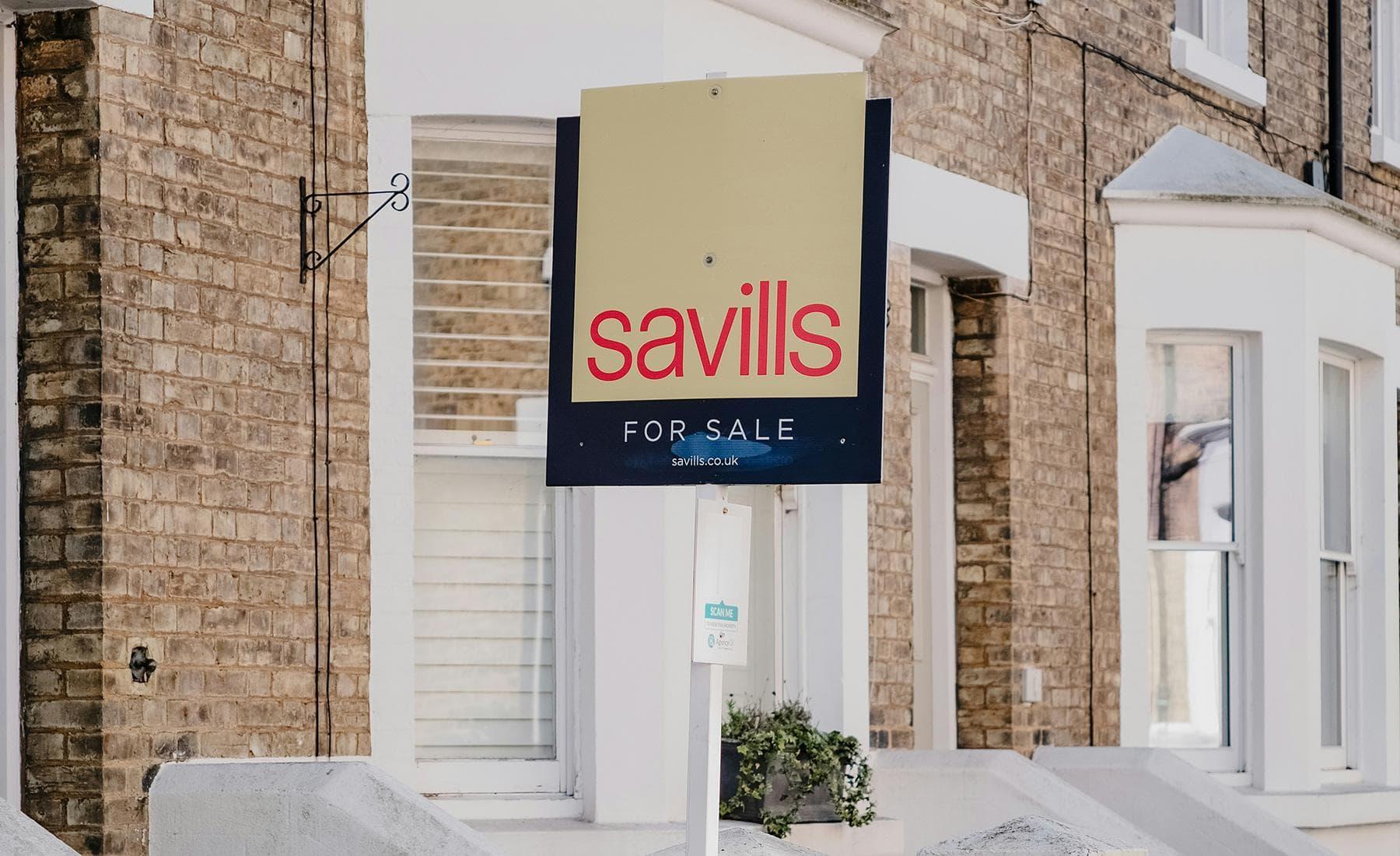
The majority of estate agents use traditional timber post boards for houses with front gardens. Wall-mounted V-boards are more common for apartments, flats and properties that sit directly onto the pavement.
Commercial Property Boards
Commercial instructions often need to attract attention from passing traffic over a much larger area, which is why larger board formats are commonly used.
Larger V-boards, freestanding signs and fence-mounted development panels allow marketing to remain visible across larger sites where standard residential boards would quickly disappear.
4. Placement and UK Regulations
Getting the design right is only part of the job. Property boards also need to comply with current advertising regulations.
Before installing a board, it's worth checking a few of the basic requirements:
- Only one board is normally permitted per property (or a permitted V-board configuration).
- Height restrictions apply and can vary depending on the location.
- Wall-mounted boards shouldn't project too far from the building.
- Boards should usually be removed within 14 days of a sale completing or a tenancy being agreed.
If you're ordering boards for a new agency, it's worth discussing installation at the same time. The right board in the wrong location won't achieve the same visibility as a simpler design that's positioned well.
Before Ordering New Property Boards
Every agency has its own branding, but the boards still need to work in the real world.
Before ordering, it's worth thinking about where they'll be installed, whether interchangeable slips will be used and how easily your branding can be recognised from the roadside. Small decisions at the design stage often make boards easier to update and more effective once they're out on site.
Frequently Asked Questions
Most residential estate agent boards are around 600mm × 800mm, making full use of the permitted 0.5 square metre advertising allowance.
Landscape boards suit wider residential frontages and traditional post-mounted installations. Portrait boards are often better for narrower properties, apartments and wall-mounted displays.
Property boards should normally be removed within 14 days of a sale completing or a tenancy agreement being signed.